Familial Hypercholesterolemia
Arboretum Familial Hypercholesterolemia Test
Familial Hypercholesterolemia (FH) is one of the most common inherited conditions, affecting approximately 1 in 250 people. It causes significantly elevated LDL cholesterol levels from birth and increases the risk of early-onset heart disease. Despite how common it is, fewer than 10% of people with FH in the United States have been diagnosed. The Arboretum Familial Hypercholesterolemia Test analyzes 4 genes with strong evidence for causing FH, providing molecular confirmation that can guide treatment decisions and identify at-risk family members.
Clinical Indications
Consider testing for individuals with very high LDL cholesterol (190 mg/dL or above in adults, 160 mg/dL or above in children), a personal or family history of early-onset coronary artery disease, or a close relative with a confirmed FH diagnosis. Clinical scoring tools such as the Dutch Lipid Clinic Network criteria can help identify candidates for testing.
Scope / Genes Tested
LDLR, APOB, PCSK9, LDLRAP1
Test Details
- Specimen Source: Buccal (cheek) swab
- Sequencing Technology: Whole Exome Sequencing
Analytical Performance
This test detects >99.5% of described mutations in the targeted genes, including single nucleotide variants, small insertions and deletions, and multi-exon copy number changes.
Clinical Utility
A positive result confirms a genetic diagnosis of FH, which can guide treatment intensity and support eligibility for advanced cholesterol-lowering therapies that may require genetic documentation for insurance approval. Results also identify which family members should be evaluated. A negative result does not rule out FH; approximately 20-40% of individuals who meet clinical criteria will not have a detectable variant in these four genes.
Variant Reclassification & Ongoing Monitoring
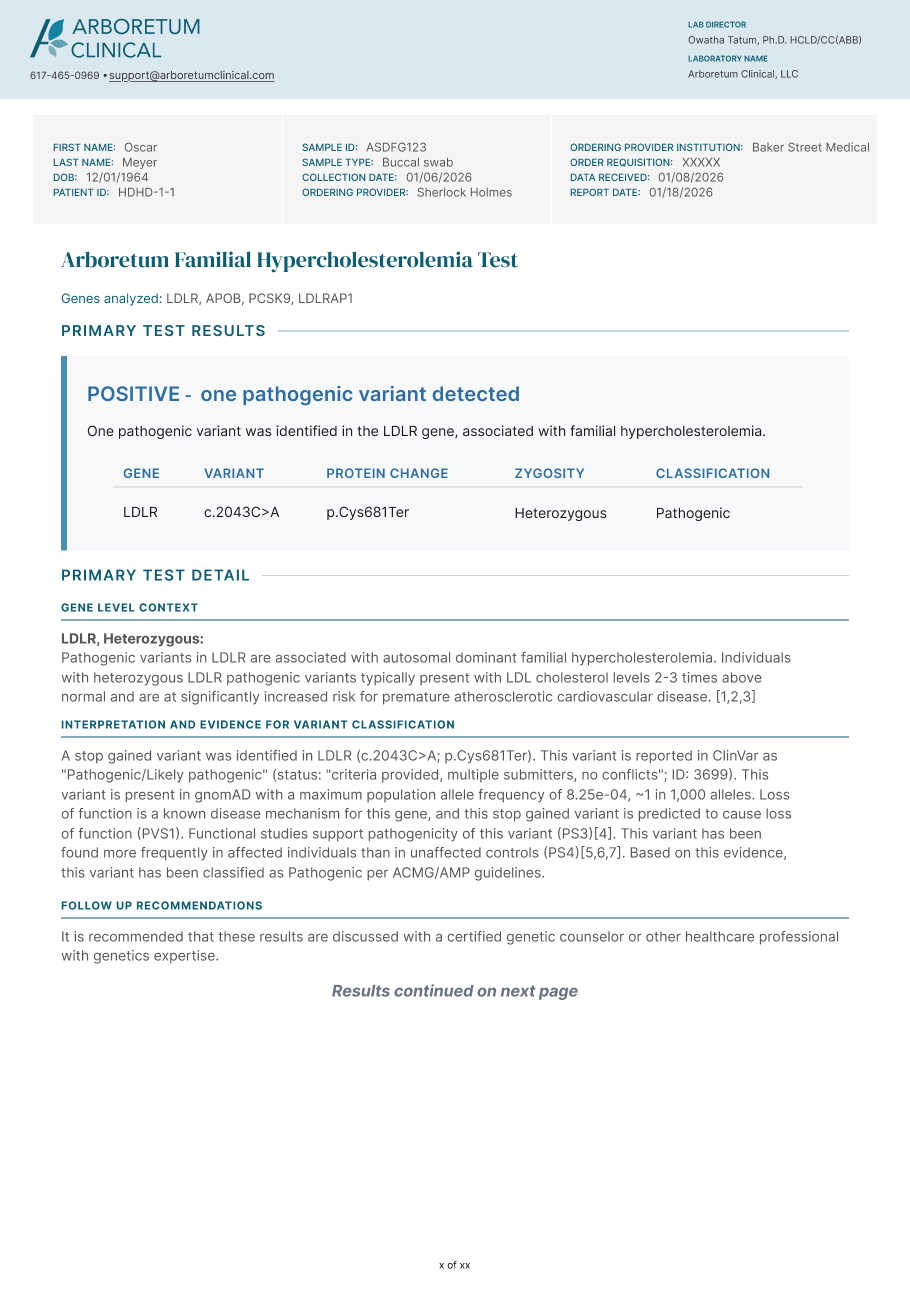
Sample Report
Supporting Links and Documents
New to Arboretum Clinical?