Cardiomyopathies
Arboretum Hereditary Cardiomyopathy Test
Inherited cardiomyopathies are a group of heart muscle diseases that can lead to heart failure, dangerous heart rhythms, and sudden cardiac death. The most common form, hypertrophic cardiomyopathy (HCM), affects approximately 1 in 500 people and is the leading cause of sudden cardiac death in young athletes. The Arboretum Hereditary Cardiomyopathy Test analyzes 83 genes associated with inherited cardiomyopathies, including HCM, dilated cardiomyopathy (DCM), arrhythmogenic cardiomyopathy (ACM), restrictive cardiomyopathy (RCM), and left ventricular noncompaction (LVNC).
Clinical Indications
Consider testing for individuals with a clinical or imaging diagnosis of cardiomyopathy, unexplained thickening, enlargement, or weakening of the heart muscle, a family history of cardiomyopathy or sudden cardiac death, early onset atrial fibrillation, or a close relative with a known genetic variant associated with cardiomyopathy.
Scope / Genes Tested
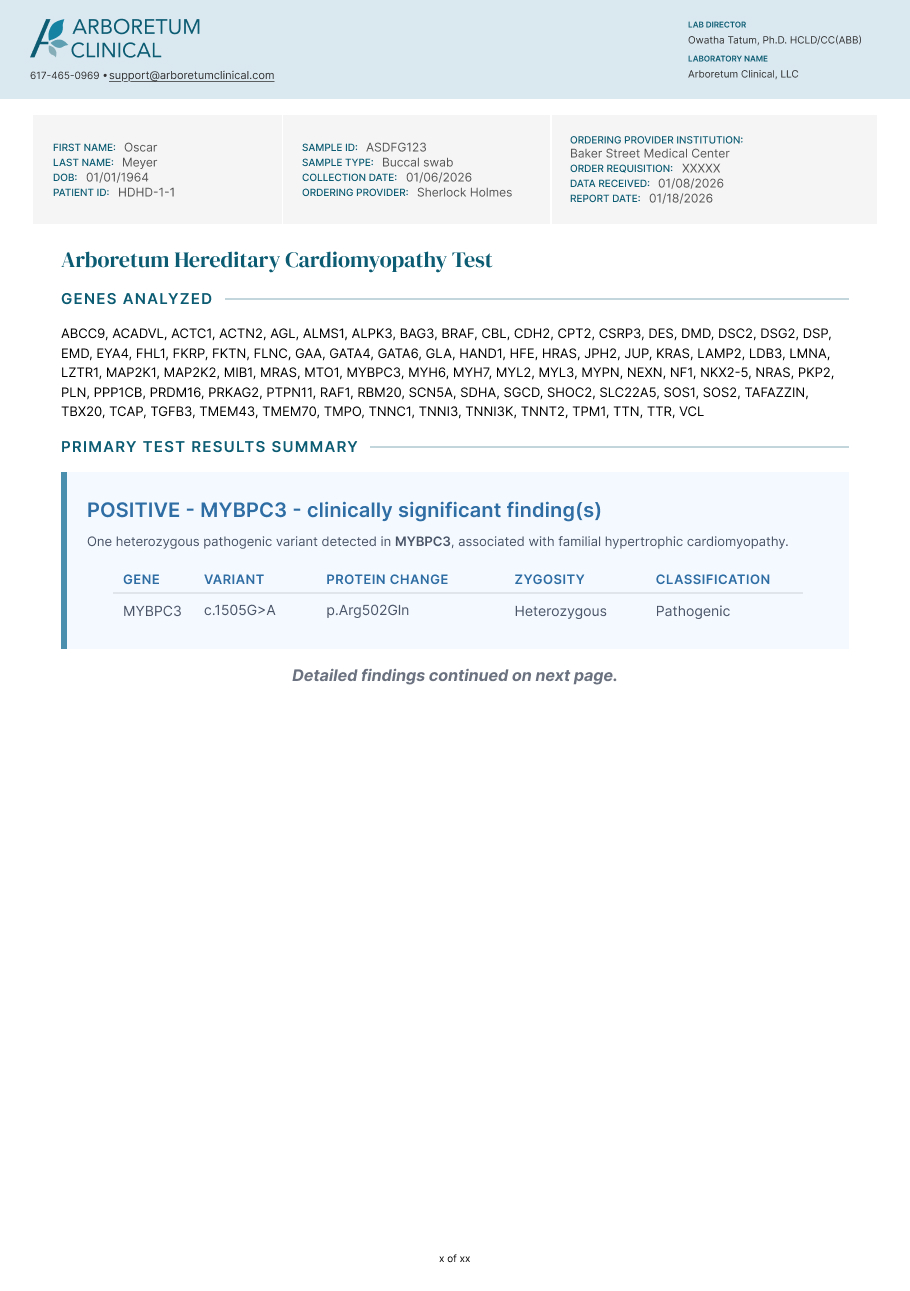
ABCC9, ACADVL, ACTC1, ACTN2, AGL, ALMS1, ALPK3, BAG3, BRAF, CBL, CDH2, CPT2, CSRP3, DES, DMD, DSC2, DSG2, DSP, EMD, EYA4, FHL1, FKRP, FKTN, FLNC, GAA, GATA4, GATA6, GLA, HAND1, HFE, HRAS, JPH2, JUP, KRAS, LAMP2, LDB3, LMNA, LZTR1, MAP2K1, MAP2K2, MIB1, MRAS, MTO1, MYBPC3, MYH6, MYH7, MYL2, MYL3, MYPN, NEXN, NF1, NKX2-5, NRAS, PKP2, PLN, PPP1CB, PRDM16, PRKAG2, PTPN11, RAF1, RBM20, SCN5A, SDHA, SGCD, SHOC2, SLC22A5, SOS1, SOS2, TAFAZZIN, TBX20, TCAP, TGFB3, TMEM43, TMEM70, TMPO, TNNC1, TNNI3, TNNI3K, TNNT2, TPM1, TTN, TTR, VCL
Test Details
- Specimen Source: Buccal (cheek) swab
- Sequencing Technology: Whole Exome Sequencing
Analytical Performance
This test detects >99.5% of described mutations in the targeted genes, including single nucleotide variants, small insertions and deletions, and multi-exon copy number changes.
Clinical Utility
A positive result can help determine sudden cardiac death risk, guide decisions about cardiac devices and medication choices, inform exercise recommendations, and identify specific treatable conditions such as Fabry disease or cardiac amyloidosis. Results also help identify family members who should be monitored.
Variant Reclassification & Ongoing Monitoring
Sample Report
Supporting Links and Documents
New to Arboretum Clinical?