Coronary Artery Disease PRS
Arboretum Coronary Artery Disease Polygenic Risk Score
The Arboretum Coronary Artery Disease (CAD) Polygenic Risk Score measures genetic predisposition to coronary artery disease based on the combined effect of thousands of common genetic variants across the genome. Unlike single-gene tests that look for rare, high-impact variants, the PRS captures the cumulative influence of many common variants that together can meaningfully shift disease risk. The 2026 ACC/AHA Guideline on the Management of Dyslipidemia recognizes polygenic risk scores as a factor that can help refine cardiovascular risk assessment.
Clinical Indications
The CAD PRS is designed to complement standard cardiovascular risk assessment. It may be particularly useful for patients at intermediate risk where additional information could change treatment decisions, patients with a family history of early-onset heart disease who do not have a single-gene finding, and individuals who want to understand their genetic cardiovascular risk profile. The 2026 ACC/AHA dyslipidemia guidelines support using risk enhancers like the CAD PRS alongside standard risk calculators to inform treatment decisions.
Test Details
- Specimen Source: Buccal (cheek) swab
- Sequencing Technology: Whole Exome Sequencing and Whole Genome Sequencing
Methodology
- Ancestry normalization model
- Score delivered as percentile of risk
Clinical Utility
A high PRS identifies individuals with elevated genetic risk of coronary artery disease that is independent of traditional risk factors like cholesterol levels, blood pressure, and smoking. This information can support decisions about cholesterol-lowering medication, guide the intensity of preventive care, inform shared decision-making between patients and providers, and add context to a family history of heart disease when no single-gene cause has been found.
Keeping Pace with the Science
Polygenic risk scores are refined as larger and more diverse genomic datasets become available. Arboretum periodically updates its PRS models to reflect improvements in accuracy and ancestry representation. If a meaningful update affects your score, we reissue your report and notify your provider.
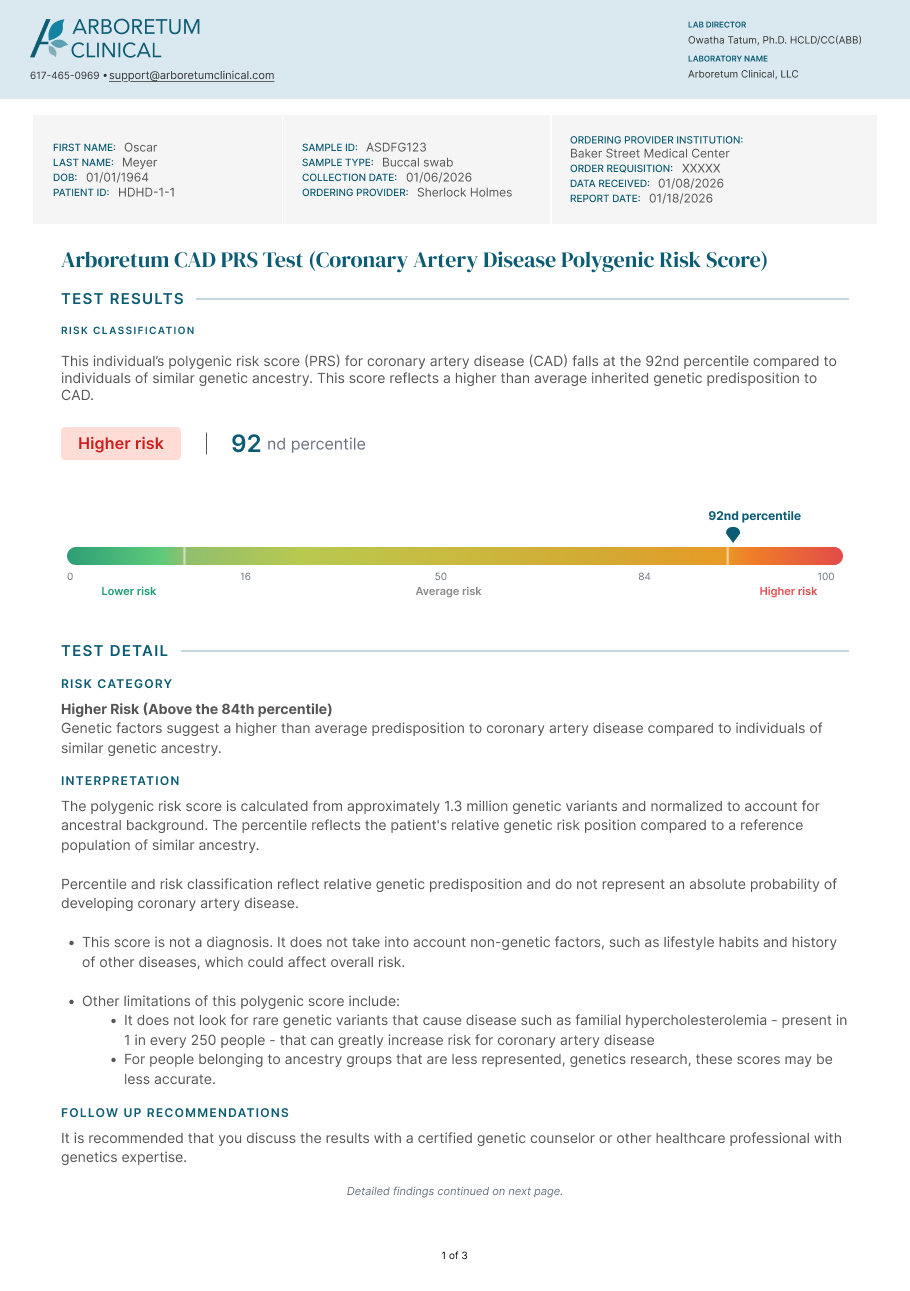
Sample Report
Supporting Links and Documents
New to Arboretum Clinical?