Cancer
Arboretum Hereditary Cancer Test
The Arboretum Hereditary Cancer Test is a broad hereditary cancer risk test associated with increased risk for hereditary cancer syndromes. The test covers genes linked to breast, ovarian, colorectal, pancreatic, prostate, kidney, thyroid, endocrine, melanoma, and other cancer types. Results can help guide cancer screening recommendations, inform risk-reduction strategies, identify targeted therapy options, and determine whether family members may benefit from testing.
Clinical Indications
Consider testing for individuals with early-onset cancer (generally diagnosed before age 50), multiple primary cancers, a rare or unusual tumor type, a strong family history of cancer across multiple relatives, or a known hereditary cancer syndrome in the family. Testing may also be appropriate when results could affect treatment decisions, such as targeted therapy eligibility.
Scope / Genes Tested
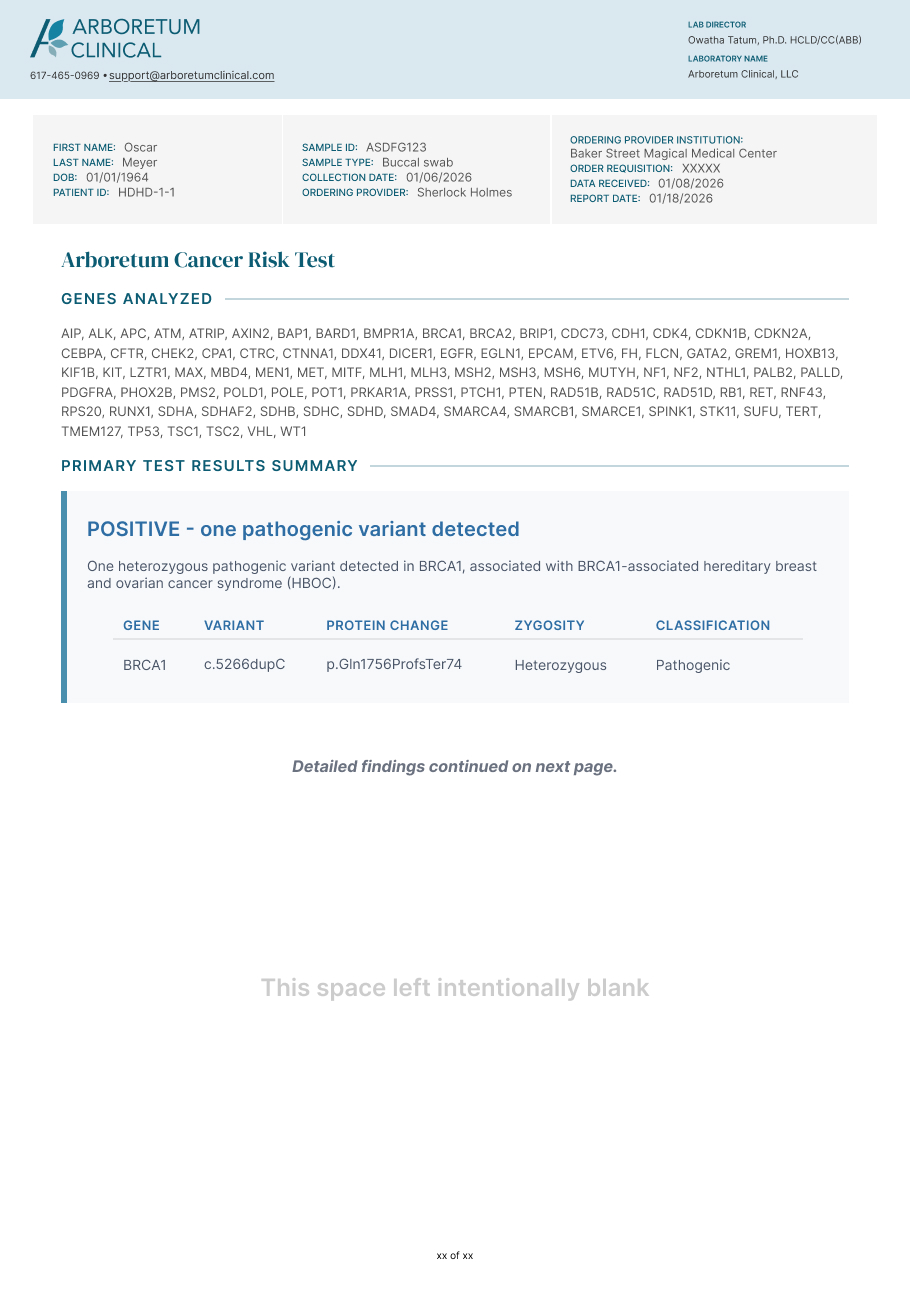
AIP, ALK, APC, ATM, ATRIP, AXIN2, BAP1, BARD1, BMPR1A, BRCA1, BRCA2, BRIP1, CDC73, CDH1, CDK4, CDKN1B, CDKN2A, CEBPA, CFTR, CHEK2, CPA1, CTRC, CTNNA1, DDX41, DICER1, EGFR, EGLN1, EPCAM, ETV6, FH, FLCN, GATA2, GREM1, HOXB13, KIF1B, KIT, LZTR1, MAX, MBD4, MEN1, MET, MITF, MLH1, MLH3, MSH2, MSH3, MSH6, MUTYH, NF1, NF2, NTHL1, PALB2, PALLD, PDGFRA, PHOX2B, PMS2, POLD1, POLE, POT1, PRKAR1A, PRSS1, PTCH1, PTEN, RAD51B, RAD51C, RAD51D, RB1, RET, RNF43, RPS20, RUNX1, SDHA, SDHAF2, SDHB, SDHC, SDHD, SMAD4, SMARCA4, SMARCB1, SMARCE1, SPINK1, STK11, SUFU, TERT, TMEM127, TP53, TSC1, TSC2, VHL, WT1
Test Details
- Specimen Source: Buccal (cheek) swab
- Sequencing Technology: Whole Exome Sequencing
Analytical Performance
This test detects >99.5% of described mutations in the targeted genes, including single nucleotide variants, small insertions and deletions, and multi-exon copy number changes.
Clinical Utility
A positive result identifies an inherited cancer predisposition, which can help guide how often and what type of screening is recommended, inform risk-reduction options, determine eligibility for targeted therapies, and identify family members who may carry the same variant and benefit from their own evaluation.
Variant Reclassification & Ongoing Monitoring
Sample Report
Supporting Links and Documents
New to Arboretum Clinical?