Arrhythmias
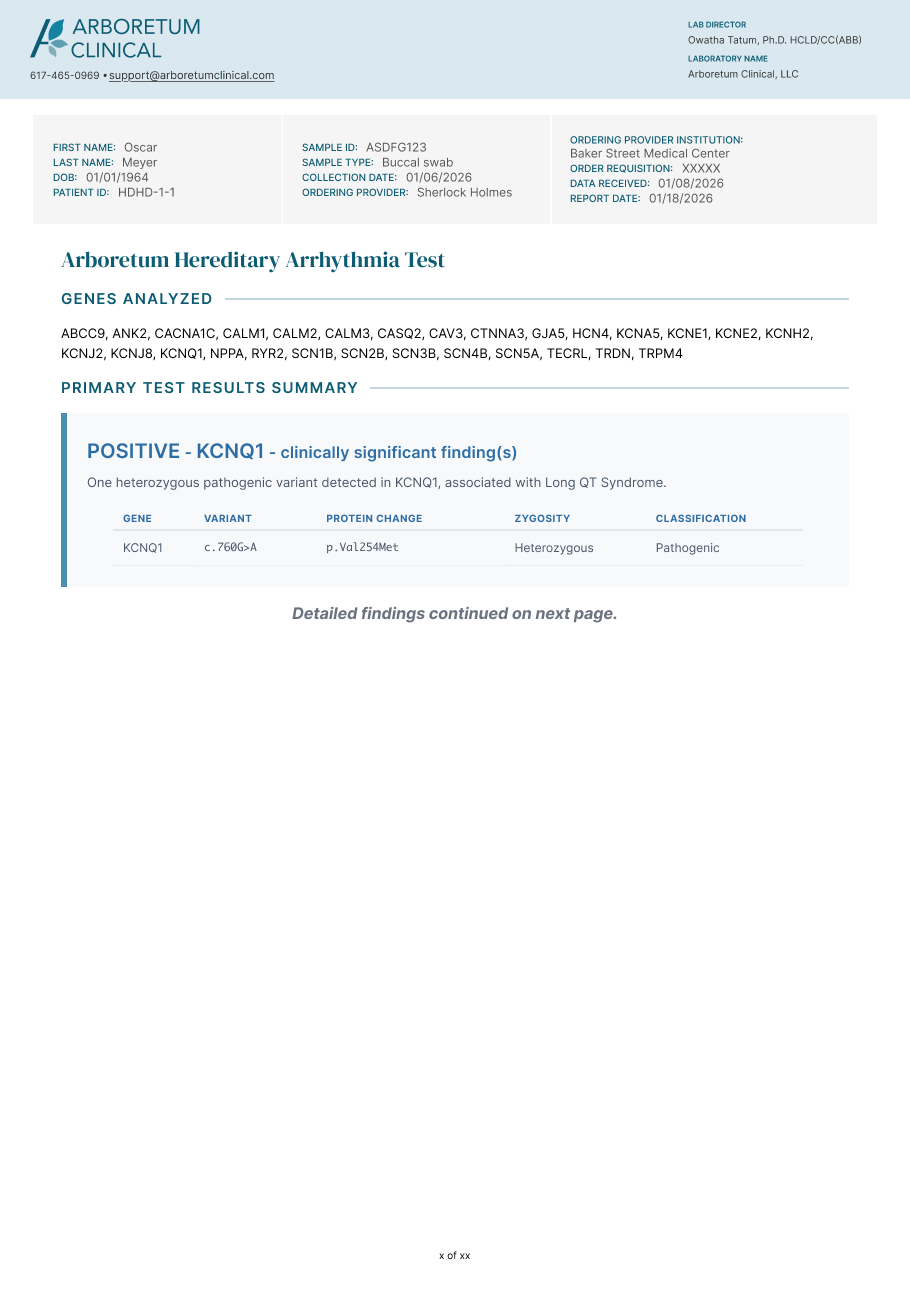
Arboretum Hereditary Arrhythmia Test
Inherited arrhythmia syndromes cause abnormal heart rhythms that can lead to fainting, cardiac arrest, and sudden death, particularly in young and otherwise healthy individuals. Long QT Syndrome, one of the most common forms, affects approximately 1 in 2,000 people. Genetic testing identifies the cause in about 75-80% of clinically diagnosed cases. The Arboretum Hereditary Arrhythmia Test analyzes 28 genes associated with inherited heart rhythm disorders including Long QT Syndrome, Brugada Syndrome, Catecholaminergic Polymorphic Ventricular Tachycardia (CPVT), Short QT Syndrome, and Progressive Cardiac Conduction Disease.
Clinical Indications
Consider testing for individuals with a diagnosed or suspected inherited arrhythmia, unexplained fainting or cardiac arrest (particularly before age 40), ECG findings suggesting an inherited rhythm disorder, early onset atrial fibrillation, a family member who died suddenly and unexpectedly, or a close relative with a known genetic variant associated with an arrhythmia syndrome.
Scope / Genes Tested
ABCC9, ANK2, CACNA1C, CALM1, CALM2, CALM3, CASQ2, CAV3, CTNNA3, GJA5, HCN4, KCNA5, KCNE1, KCNE2, KCNH2, KCNJ2, KCNJ8, KCNQ1, NPPA, RYR2, SCN1B, SCN2B, SCN3B, SCN4B, SCN5A, TECRL, TRDN, TRPM4
Test Details
- Specimen Source: Buccal (cheek) swab
- Sequencing Technology: Whole Exome Sequencing
Analytical Performance
This test detects >99.5% of described mutations in the targeted genes, including single nucleotide variants, small insertions and deletions, and multi-exon copy number changes.
Clinical Utility
Inherited arrhythmia syndromes are among the areas where genetic results most directly guide treatment. A positive result can help determine optimal medication choices, inform decisions about implantable cardiac devices, guide activity and exercise recommendations, and identify family members who should be evaluated and monitored.
Variant Reclassification & Ongoing Monitoring
Sample Report
Supporting Links and Documents
New to Arboretum Clinical?